In the 1970s, during the Chilean military dictatorship (1973–1990), Father Miguel Ortega wrote an open letter to a young man who had been drafted into the army. In the letter the priest lamented that Chilean law did not recognize a right to conscientious objection and that a civilian alternative to military service, as proposed by the Second Vatican Council (1962–1965), did not exist in Chile. He advised the young man not to see his call up as a “misfortune” but as an opportunity to better know God and to live his faith. He should not believe simplistic talk of good and evil, friends and foes, or absolute truths; things were not that simple, wrote Ortega. If the young man was ordered to shoot a defenseless soul, he must disobey the order or deliberately miss the target. Even when obeying orders, he must retain his own judgment and not blindly follow them. Ortega reportedly received death threats for writing the letter, and the fact he circulated it publicly suggests he felt the advice could have been useful to other young men.
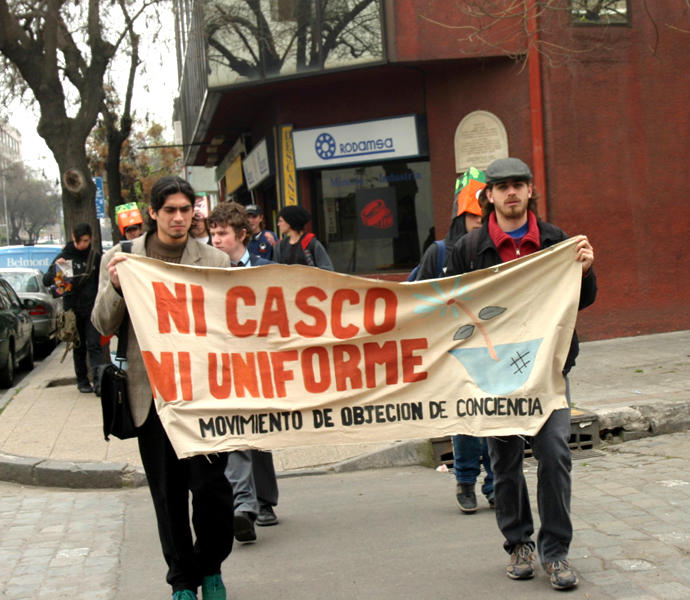
Objecting to military service under military rule was difficult, dangerous, and rare. Debates about conscription, “absolute truths,” the right to conscientious objection, and the obligation to disobey orders to shoot civilians and compatriots only took place on a national stage after Chile returned to democracy in 1990. This chapter analyzes these debates in postdictatorship Chile as expressions of the country’s struggle to come to terms with its recent past. The conscientious objector movement of the 1990s, driven by political actors and youth groups, was a narrow rejection of conscription within a broader ideological rejection of the lingering influence of the armed forces in Chilean society. In the early twenty-first century, an ex-conscript movement demanded victim reparations for men who had been called up during the military regime of Augusto Pinochet (1973-1990), challenging the established politics of memory and victimhood. Neither movement challenged the legitimacy of military service, but both revealed the tensions and limits of Chile’s engagement with a dictatorial past that continues to shape how Chileans think of themselves.
Leith Passmore, “Objection, Obedience, Complicity, and Victimhood: Debates about Compulsory Military Service in Postdictatorship Chile,” in Amy J. Rutenberg (ed.), Conscription in the Twentieth Century: Coercion and Resistance in Global Perspective (University if Kansas Press, 2026).